ChatGPT ads start contextual, not personalized

First published .
OpenAI's August privacy update explains how the first ads in this rollout will be selected. The important distinction is simple: not personalized does not mean untargeted.
Bottom line
For the rollout described in OpenAI's 15 August email, initial ad selection uses 0% of past-chat or memory history. It can use the current conversation and limited context instead. Advertisers receive 0 raw ChatGPT conversations, only aggregate performance examples such as views and clicks.
Confidence: the privacy and ad-selection claims come from OpenAI's email and current help documentation, not an independent audit. The 60% figure is a rounded word-count share of the substantive sections marked as Aiso interpretation, excluding headings, source notes and this opener.
The cleanest interpretation
This is profile-free targeting, not context-free advertising. The live thread can still reveal commercial intent, constraints and timing without OpenAI building the initial selection from a user's earlier conversations.
What OpenAI actually announced
On 15 August 2026, OpenAI emailed users in its European privacy-policy flow that ads may appear on Free and Go plans later in the month. Plus, Pro, Business, Enterprise and Education remain ad-free.
For the rollout described in that email, ads will not be personalized at first. OpenAI says selection can use the current topic of the conversation and limited context such as general location and device type. Past chats and memories are excluded from this initial selection.
OpenAI's current Ads in ChatGPT FAQ adds more detail. The system can consider the context and intent of the current conversation, the landing page, title and copy of the ad, advertiser-provided context hints and targeting selections. When several ads are eligible, relevance and advertiser bids can affect which one appears first.
Ads appear below a response, are labeled as sponsored and are visually separate from ChatGPT's answer. OpenAI says the ad system runs separately from the chat model and advertisers cannot alter or rank the answer.
Advertisers do not receive chats, chat history, memories or personal details. The initial reporting examples named by OpenAI are aggregate views and clicks. Personalization can use broader ChatGPT signals only when the user has enabled it, and users can turn personalization off or clear ad data.
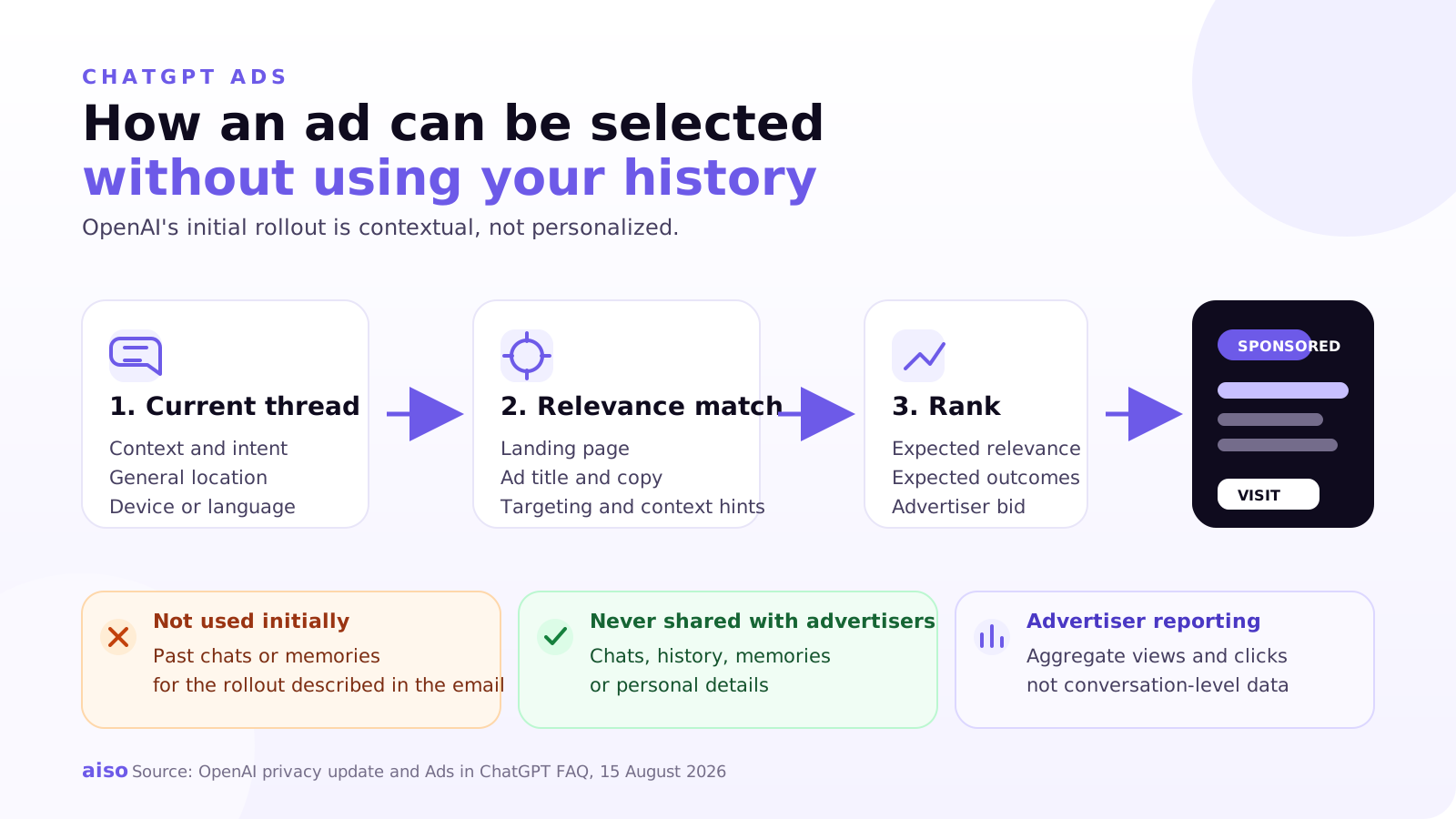
How an ad can be selected without being personalized
Current conversation
The context and intent expressed in the active ChatGPT thread.
Limited context
The email names general location and device type. OpenAI's FAQ also names language.
The ad and landing page
Landing page, title, copy, advertiser context hints and targeting selections.
Ranking inputs
When several ads qualify, OpenAI says relevance and advertiser bids can affect order.
The active conversation is the new unit of relevance
The useful distinction is not personalized versus untargeted. It is profile targeting versus conversation targeting. The first version described in the email does not need a behavioral profile to identify commercial intent. A live conversation already contains a need, constraints, objections and sometimes a preferred product category.
A search ad usually starts from a query. A ChatGPT ad can be matched against a fuller request state built over several turns. This is consistent with Aiso's research on the conversation as the real AI search query, which shows that the final prompt often contains only part of the need expressed across a session.
The landing page is not only a post-click destination. OpenAI explicitly lists it among the signals used to select and deliver ads. Our interpretation is that the page's language, offer and evidence may affect relevance before the click as well as conversion after it. OpenAI has not described a Google-style quality score, so marketers should not assume one exists.
What this changes for marketers
The practical work starts before a campaign is uploaded. A useful ad has to fit the decision being made inside the thread and continue that decision cleanly after the click.
Map decision conversations, not keyword lists
Identify the threads where a person moves from a broad problem to constraints, comparison and purchase intent. The useful unit is the request state across the conversation, not only the last message.
Make the landing page part of the targeting work
OpenAI lists the landing page as an ad-selection signal. Keep the page tightly aligned with the need, wording, geography, product facts and proof implied by the conversation.
Write for relevance before persuasion
A vague brand line gives the system little evidence of fit. State the product, audience, use case, key constraint and destination clearly. Persuasion still matters, but relevance has to be legible first.
Measure the handoff after the aggregate report
OpenAI currently names views and clicks as advertiser reporting examples. Use clean landing-page analytics, CRM attribution and conversion events to connect that aggregate delivery to business outcomes.
Treat personalization as optional upside
Build a campaign that is useful from the current thread alone. If opt-in personalization later improves relevance, it should strengthen a sound contextual campaign rather than rescue a weak one.
What stays inside ChatGPT
Privacy creates a hard boundary between the signals ChatGPT may use internally and the data an advertiser receives. That boundary matters for campaign planning and measurement.
| Information | Used for initial selection | What the advertiser receives |
|---|---|---|
| Current conversation context | Used inside ChatGPT | No |
| Past chats and memories | Not used in the rollout described in the email | No |
| General location and device or language context | May be used inside ChatGPT | No personal-level data |
| Ad performance | Used to measure and improve ads | Aggregate views and clicks |
Because advertisers do not receive the conversations that produced an impression, the ad platform cannot become a raw prompt-mining tool. Campaign planning will still depend on consent-based conversation research, customer interviews and aggregate outcomes.
What remains unknown
OpenAI has disclosed the main categories of signals, but not the detailed mechanics. The exact auction design, minimum relevance thresholds, available controls by market, reporting dimensions beyond aggregate views and clicks, and the weight assigned to each signal remain unclear.
Any precise claim about match types, audience construction, quality scores or conversion attribution should be treated as speculation until OpenAI documents it.
A practical preparation checklist
Collect real high-intent conversations and identify the turns where a paid offer would be useful.
Group those conversations by decision, constraint and desired outcome rather than demographic persona.
Create landing pages that repeat the same product facts, geography, proof and next step.
Set clean click, lead, qualified-pipeline and revenue events before the first campaign launches.